Taxing the digital rail: how UPI transaction fees impact India’s strained economy and households
India’s real economy faces high living costs, subdued rural consumption, and compressed retail margins. An economic analysis of how a 0.40% merchant MDR behaves like an indirect tax, how it transmits through supply chains, and what friction on digital public rails means for ordinary citizens.
The macroeconomic context: a consumption-constrained recovery
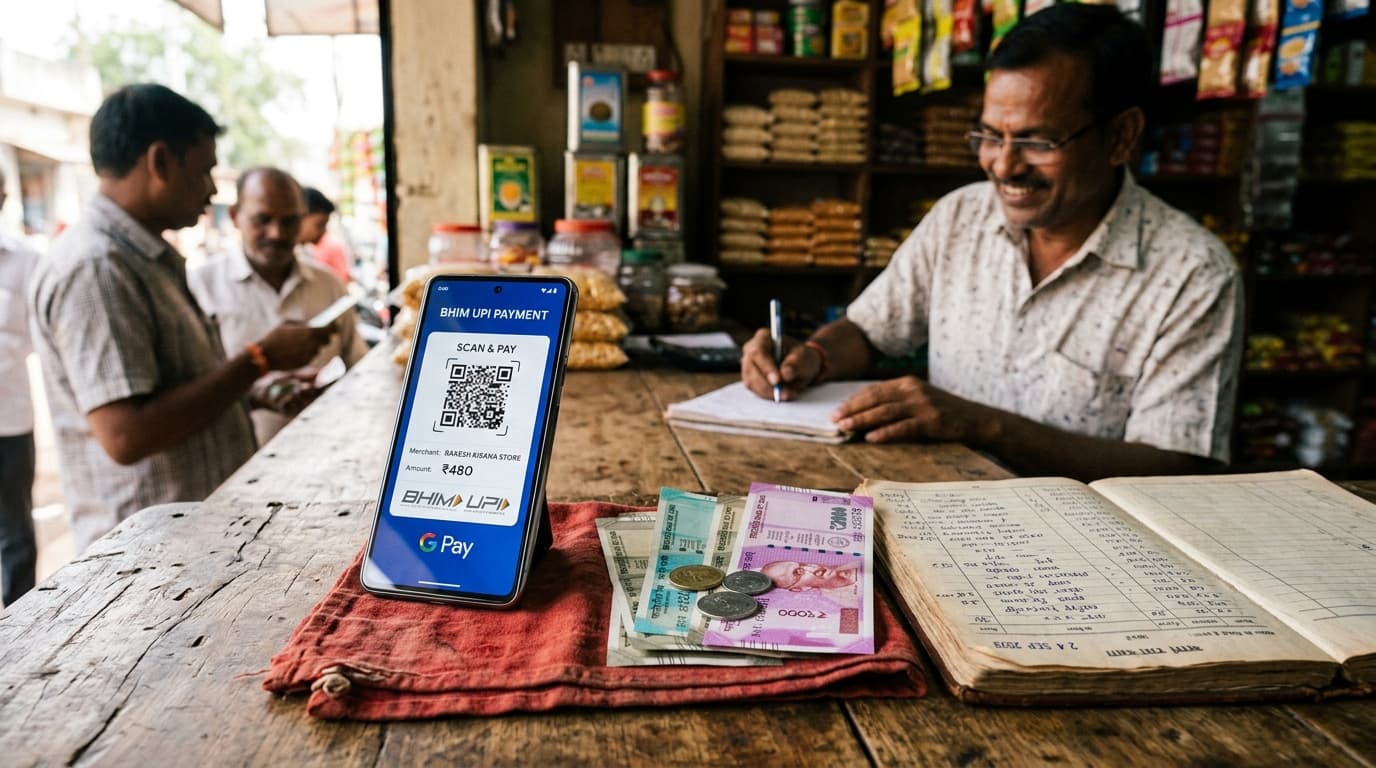
India's broader retail economy is navigating a delicate phase. While headline gross domestic product prints suggest resilience, micro-level indicators tell a more cautious story. Urban middle-class budgets are stretched by persistent food inflation and rent, while rural demand growth remains uneven. In fast-moving consumer goods, apparel, and consumer durables, volume growth has lagged price growth for multiple quarters.
In this environment, operating margins for physical shopkeepers and medium-sized merchants are compressed. A typical neighbourhood electronics store, apparel boutique, or wholesale distributor operates on net profit margins between 2% and 5%. Every basis point of unexpected operational friction directly erodes thin bottom lines.
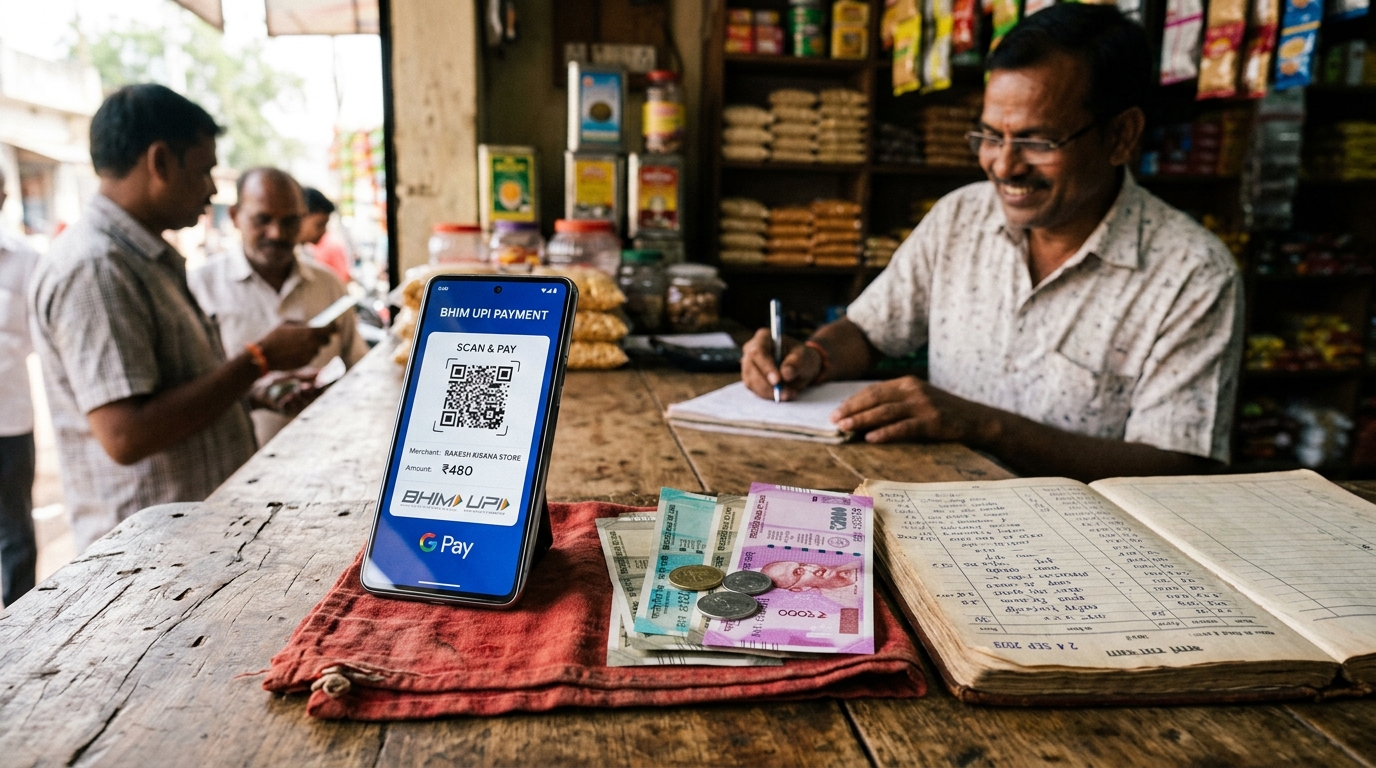
Introducing a 0.40% Merchant Discount Rate (MDR) on UPI transactions above 2,000 rupees enters this specific economic reality. Proponents describe it as a private service fee intended to support banking infrastructure. For market participants already managing escalating compliance overheads, the levy functions in practice as a new friction tax on commerce.
Is MDR a tax or a service fee? The economics of incidence
Legally, a tax is an unrequited statutory levy collected by the sovereign state for public expenditure. MDR is technically an interchange and acquiring fee retained by commercial entities: the acquiring bank, the remitting bank, and the National Payments Corporation of India (NPCI) network switch.
In economic science, however, statutory nomenclature matters far less than economic incidence. The classic Harberger incidence theorem demonstrates that the entity legally assigned to pay a charge is rarely the entity that ultimately absorbs its cost. The burden shifts according to the relative price elasticities of supply and demand.
When a payment rail becomes the dominant medium of exchange, accounting for over 80% of retail transaction volume, an across-the-board charge on that rail imposes all the behavioral distortions of an excise tax:
- Deadweight loss: Higher transaction costs discourage marginal commerce or drive transactions into unmonitored channels.
- Inelastic pass-through: Retailers cannot absorb ongoing fee deductions without adjusting final prices across their catalog.
- Regulatory friction: Compliance and verification costs increase across the distribution chain.
Even though Ministry of Finance directives prohibit charging consumers an explicit surcharge at PIN entry, the economic cost does not vanish. It diffuses through price tags, reduced discount buffers, and altered payment incentives.
The margin arithmetic: why 0.40% hits harder than it looks
To understand why retailers react strongly to a 0.40% fee, consider how thin retail operating margins actually operate.
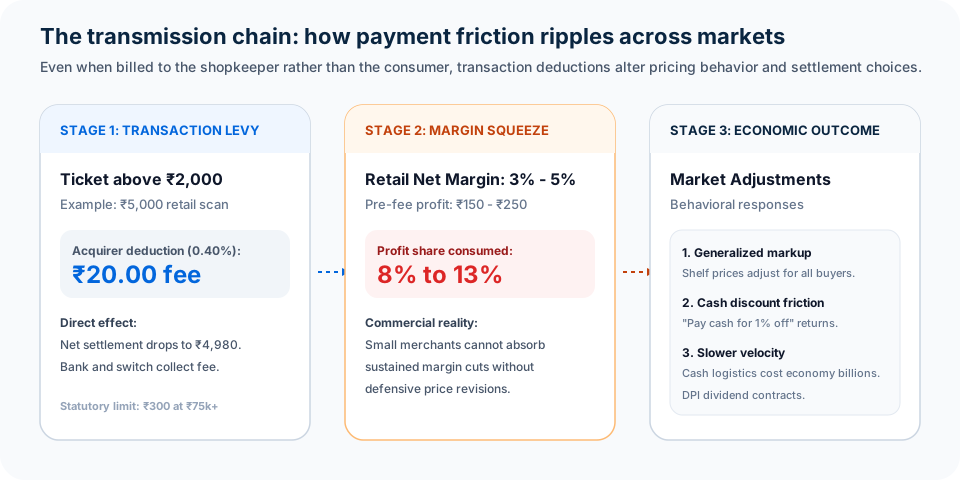
A fee of 0.40% sounds negligible when viewed as a fraction of gross top-line revenue. But businesses do not pay operational costs out of top-line revenue; they pay them out of net profit margins.
| Transaction ticket | Net retail margin (3%) | MDR deduction (0.40%) | Share of profit erased |
|---|---|---|---|
| ₹2,500 (Footwear / Apparel) | ₹75.00 | ₹10.00 | 13.3% of profit |
| ₹5,000 (Monthly groceries) | ₹150.00 | ₹20.00 | 13.3% of profit |
| ₹15,000 (Smartphone purchase) | ₹450.00 | ₹60.00 | 13.3% of profit |
| ₹75,000 (Jewellery / Electronics) | ₹2,250.00 | ₹300.00 (Statutory cap) | 13.3% of profit |
When an acquiring deduction consumes 10% to 15% of a merchant's net income on a sale, the merchant has three choices:
- Absorb the loss, which directly weakens business solvency and hiring.
- Mark up shelf prices across all goods, contributing to generalized retail price inflation.
- Encourage customers to pay via cash or alternative offline rails, reversing years of digitization.
The consumer impact: how households absorb the shock
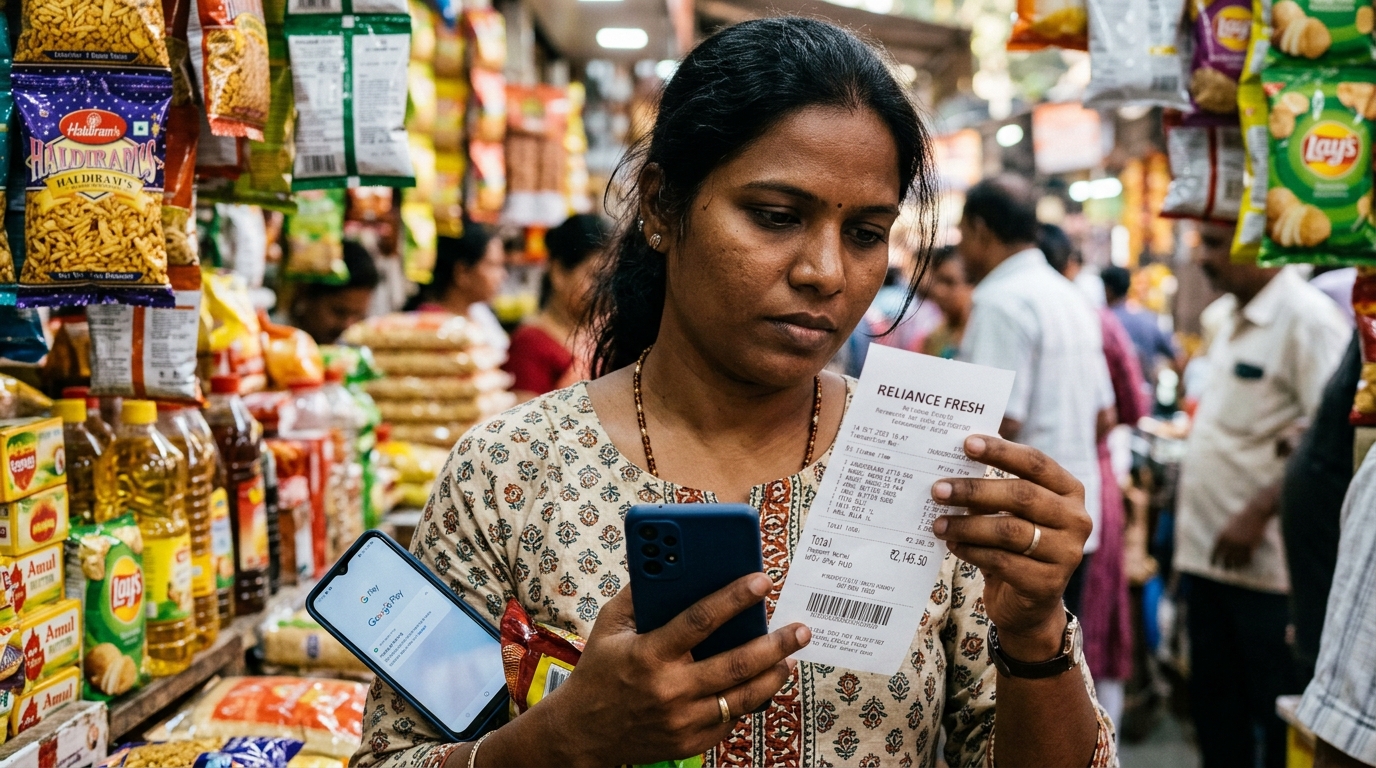
The central consumer protection built into the September 2026 gazette baseline is clear: the person scanning the QR code pays exactly zero rupees in transaction surcharge. Banks and digital wallet applications cannot append a processing charge to your debit notification.
However, household budgets do not exist in an economic vacuum. The cost reaches consumers through secondary channels:
1. Menu and sticker inflation
When retail suppliers and shopkeepers face unavoidable fees on high-ticket sales, they adjust their overall pricing formula. If an apparel merchant knows that 70% of tickets above 2,000 rupees will be paid via commercial UPI, the merchant marks up inventory prices by 0.5% to 1.0% to protect margins. Cash buyers and digital buyers alike end up paying this higher baseline price.
2. The return of two-tier pricing
Before zero-MDR was mandated in 2020, merchant counters routinely displayed signs offering a "2% cash discount" or refusing credit cards for bills under 500 rupees. While formal surcharges on UPI remain illegal, informal incentives to use cash are already re-emerging in wholesale hubs, hardware markets, and local electronics retailers.
3. Working-class and middle-income budget pressures
India's retail consumers have endured sustained cumulative inflation across pulses, vegetables, fuel, and education. When payment friction adds even minor upward pressure to consumer bills, it directly reduces discretionary purchasing power.
The risk of de-digitalization and the true cost of cash
The most significant macroeconomic risk of taxing UPI is not merely financial friction; it is behavioral reversion to cash.
Between 2016 and 2026, UPI achieved one of the fastest transitions from physical currency to digital payments in global economic history. Street vendors, autorickshaw drivers, and large department stores adopted the same standardized QR infrastructure because it was frictionless, immediate, and free.
Physical cash carries massive hidden systemic costs that private actors rarely see on their receipts:
- Currency logistics: Printing notes, transporting armored cash vans, maintaining automated teller machines (ATMs), and armed security cost the Reserve Bank of India and commercial banks tens of thousands of crores annually.
- Counterfeiting and shrinkage: Cash theft, cashier errors, and fake currency detection create direct operational losses for small enterprises.
- Tax evasion and informalization: Digital transactions create an auditable electronic paper trail that expands the formal tax base and enables formal bank credit underwriting for small merchants without collateral.
If a 0.40% acquiring deduction incentivizes merchants to tuck their UPI QR standees into drawers for tickets over 2,000 rupees, the economy loses far more in cash-management overhead and lost tax formalization than payment aggregators gain in interchange fees.
The public good dilemma: who should fund digital infrastructure?
Payment rails require substantial capital investment. Commercial banks, private aggregators, and technology switches maintain cloud servers, fraud monitoring engines, and customer support centers that process over 500 million transactions daily.
The critical policy question is whether that rail should be funded through tollbooth levies on retail transactions or recognized as foundational digital public infrastructure, comparable to highways, national power grids, and port logistics.
When a government builds a highway, taxing every vehicle at every intersection slows traffic and reduces economic output. Instead, public infrastructure is typically sustained through targeted fiscal allocations, budgetary subsidies, or modest annual licensing fees that do not distort individual commercial exchanges.
Between 2020 and 2024, the central government allocated direct budgetary incentive schemes (averaging 1,500 to 2,600 crore rupees annually) to reimburse banks for processing zero-MDR UPI and RuPay debit transactions. Letting that budgetary support lapse in favor of transaction-level MDR shifts the infrastructure burden directly onto the shoulders of retail commerce.
A balanced path forward
To protect economic growth, support small enterprise viability, and sustain India's digital payments leadership, policy analysts and trade federations have proposed three constructive adjustments:
- Raise the exemption threshold: Increase the zero-MDR limit from 2,000 rupees to 5,000 rupees. This preserves free transactions for ordinary household grocery baskets, pharmacy runs, and routine apparel purchases, while restricting fees to true luxury and high-value wholesale transactions.
- Reintroduce targeted infrastructure subsidies: Reinstate central budgetary compensation for acquiring banks to cover legitimate processing overhead without penalizing retail storefronts.
- Tiered margin protections: Exempt low-margin staples (such as staple food items, packaged milk, medicines, and agricultural supplies) from standard 0.40% deductions regardless of ticket size.
Digital public infrastructure has been India's most successful economic equalizer over the past decade. Preserving that achievement requires ensuring that the digital rails remain frictionless, transparent, and affordable for the merchants and citizens who rely on them every day.
Share this article
Help friends, merchants, and colleagues stay informed with verified regulatory facts.
Official Government & Regulatory Citations
- Ministry of Finance PIB PRID 2310586Verify Primary Document
- Reserve Bank of India: Report on Currency and FinanceVerify Primary Document
- NPCI Master Circulars on UPI Interchange and Acquirer SettlementVerify Primary Document
- Mint: Retail trade bodies raise concerns over high-ticket digital payment deductionsVerify Primary Document
Put this guide into practice with our 100% free, client-side calculation engines:
Merchant MDR Calculator
Model monthly shop turnover, statutory ₹300 cap savings & yearly retained profit.
UPI Fee Calculator
Instant consumer ₹0 fee check vs shopkeeper MDR across transaction amounts.
Payment Method Finder
Compare UPI, RuPay credit cards, debit cards, and net banking for lowest fees.
Bill reader
Photograph a slip. See buyer extra ₹0 versus shop MDR on the printed total.